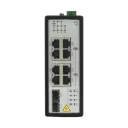

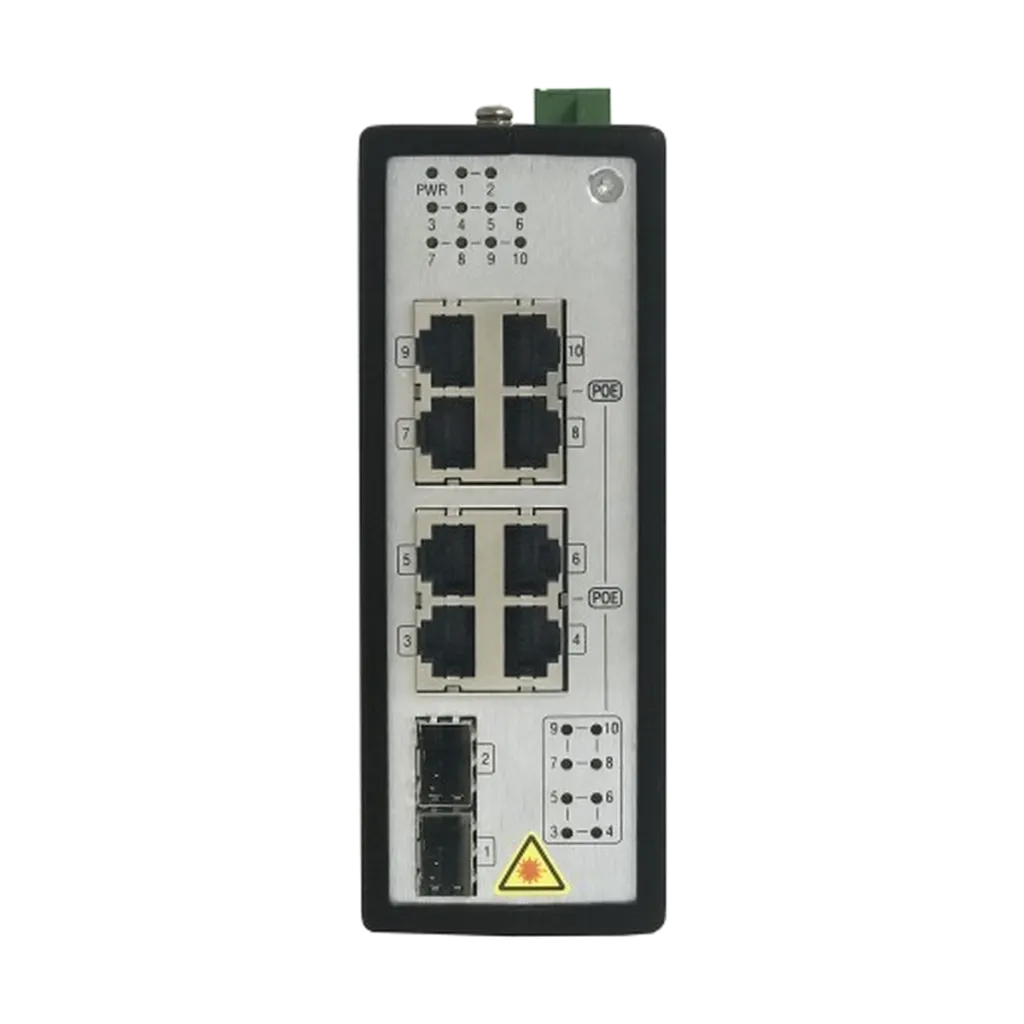
DS-3T0510P
8-Port Gigabit Industrial PoE Switch
- 8 Gigabit PoE ports, 30 W each
- Fanless, -40 °C to 75 °C
- Dual redundant power input
- Die-cast aluminium housing
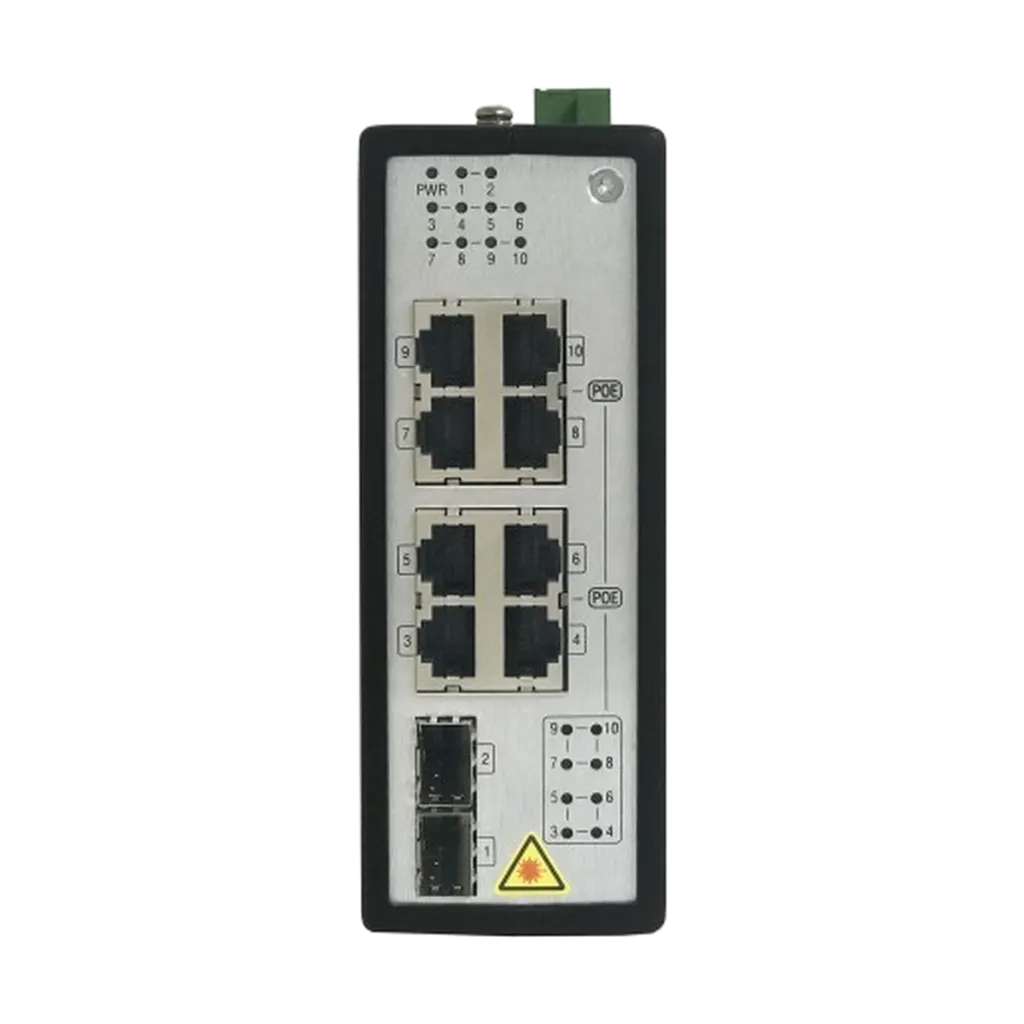
DS-3T0510P
8-Port Gigabit Industrial PoE Switch
- 8 Gigabit PoE ports, 30 W each
- Fanless, -40 °C to 75 °C
- Dual redundant power input
- Die-cast aluminium housing
Key specs
- 8 × Gigabit PoE ports, unmanaged
- IEEE 802.3af/at PoE, max. 30 W per port
- PoE device detection and power management
- 20 Gbps backplane
- Redundant dual power input
- Die-cast aluminium housing, no fan
- Operating temperature -40 °C to 75 °C (-40 °F to 167 °F)
- MTBF 400,000 hours or more
Know before you buy
Quick answers about the DS-3T0510P, and how it compares.
How many cameras can this PoE switch power?
Two limits apply: the number of PoE ports, and the total PoE budget in watts. Add up the maximum power of each camera from its datasheet and keep about 20% spare. Example: 16 cameras at 6 W each need 96 W, plus 20% is about 115 W, so a switch with a 125 W budget or more is right. A PoE port (802.3af) gives up to 15.4 W and a PoE+ port (802.3at) up to 30 W. PTZ cameras and cameras with heaters, strong IR or strobe lights need PoE+ or Hi-PoE (802.3bt). Not sure? Send us your camera list and we size it for you.
Unmanaged, smart or managed switch: which one do I need?
Unmanaged switches are plug and play, with nothing to set up: good for small systems. Smart (web managed) switches add a web page and app view for VLANs, port status, cable checks and, on many models, PoE watchdog, so you can find and fix problems from your desk. Managed (Layer 2+ or Layer 3) switches add full control, routing and ring protection for large sites, campuses and city projects. For most CCTV jobs with 8 to 48 cameras, a smart PoE switch is the best value. Ask us if you are not sure.
When do I need an industrial switch?
Industrial switches are made for outdoor cabinets, poles, factories and rooftops. They have no fan, a strong metal housing, and work from -40 °C to 75 °C (-40 °F to 167 °F), where a normal office switch can fail in a Pakistani summer. Use one in a field cabinet near the cameras and link it back to the control room.